Executive Summary: When high school boys experience chronic academic failure and behavioral breakdown, traditional classrooms often compound feelings of defeat and rebellion. Comprehensive academic recovery paired with hands-on vocational trade training and Christian mentorship provides a proven pathway to rebuild self-worth, recover lost credits, and graduate with practical career skills. At Paul Anderson Youth Home in Vidalia, Georgia, we walk alongside families across Augusta, the Central Savannah River Area (CSRA), and statewide Georgia to ensure young men are fully restored and returned home equipped for lifelong success.
Key Takeaways for Families
- Academic Frustration Fuels Behavioral Crisis: Academic failure is rarely an isolated problem; behind falling grades and truancy is often deep discouragement that manifests as anger or defiance.
- Accreditation and Credit Recovery Protect Graduation: Individualized instruction through accredited programs like Cognia enables young men to recover essential credits and earn a recognized high school diploma.
- Vocational Work Restores Purpose and Dignity: Practical trade skills teach personal accountability and work ethic, preparing young men to re-enter local CSRA communities as productive contributors.
When a teenage boy begins falling behind in high school, the warning signs often start quietly. Missing assignments turn into failing report cards, followed by skipped classes, behavioral confrontations at home, and total academic disengagement. For parents across Augusta, Columbia County, and communities throughout Georgia, watching a bright young man disconnect from his future brings intense grief and uncertainty. You wonder whether he will ever finish high school, learn to hold down a job, or find his God-given purpose.
Academic failure in adolescent boys is almost never just about books or test scores. It is directly tied to identity, emotional resilience, and personal discipline. When school becomes a daily environment of frustration, many young men choose to act out or give up entirely rather than feel incapable. At Paul Anderson Youth Home, we have spent more than six decades walking with young men through these exact struggles. We have learned that when you combine accredited academic recovery with rigorous vocational training and Christ-centered mentorship, young men can turn their trajectories around and prepare for a meaningful future.
Key Questions Answered for Families
What is academic credit recovery for troubled teen boys in Georgia?
Academic credit recovery allows high school students to retake failed or missed courses through targeted, individualized curricula, ensuring they meet Georgia Department of Education standards and graduate on time without repeating entire school years.
Why is vocational training beneficial for struggling high school boys?
Hands-on trade instruction develops tangible competence in areas like carpentry, mechanics, and maintenance, teaching problem-solving, self-reliance, and personal work ethic while rebuilding academic self-confidence.
How does residential education support long-term behavioral change?
By separating young men from negative peer groups and digital distractions, residential programs provide daily structure, dedicated teacher support, and spiritual grounding that heal emotional wounds and restore family trust.
Why Do Traditional Classrooms Often Fail Struggling Young Men?
Traditional high schools operate with large class sizes, rigid pacing, and heavy social pressures. When a young man encounters a learning obstacle or experiences emotional distress, it is easy for him to slip through the cracks. In a crowded classroom, falling behind by just a few weeks can make catching up feel impossible.
For adolescent boys, chronic failure carries a heavy emotional cost. A young man who cannot keep up often feels exposed in front of his peers. Rather than asking for help or admitting confusion, he may mask his vulnerability with disruptive behavior, apathy, or skipped classes. In many public and private school environments across Richmond, Columbia, and Burke counties, educators simply lack the time and individual resources required to unpack the root cause of every student’s behavioral breakdown.
Punitive responses such as detentions, in-school suspensions, and expulsions often worsen the cycle. When a student is removed from the classroom as a disciplinary measure, he falls even further behind academically, reinforcing the belief that he is fundamentally flawed. Breaking this cycle requires a complete change of environment where academic instruction is personalized and paired with genuine relational support.
How Does Academic Frustration Turn into Behavioral Rebellion?
In our work with families over the past 60 years, we have seen time and again that behavioral rebellion is frequently a protective reaction against academic defeat. Consider the typical progression that many parents experience at home:
- The Early Struggle: Unaddressed reading gaps, attention challenges, or executive function difficulties cause the student to struggle with homework and test preparation.
- Defensive Disengagement: To protect his self-esteem, the young man adopts an attitude of indifference, claiming that school is useless or that he does not care about grades.
- Escalation and Conflict: Evening battles over homework turn into daily shouting matches, truancy, and dishonesty about completed assignments.
- Negative Peer Alignment: Disconnected from positive academic peer groups, he seeks acceptance among other disengaged youth who validate risky or destructive behaviors.
By the time parents reach out for residential assistance, the conflict has often expanded far beyond missing homework. It has strained marriages, exhausted household peace, and pushed the young man into high-risk behaviors. Recognizing that academic struggle and emotional health are deeply connected is the first step toward lasting healing.
What Does Comprehensive Academic Credit Recovery Look Like in Practice?
Effective credit recovery is not about taking shortcuts or handing out unearned grades. It is about identifying exact knowledge gaps, restructuring the learning process, and giving a student the one-on-one attention necessary to master core subject matter.
At an accredited Christian residential school, academic recovery follows a clear and supportive methodology:
| Step in Academic Recovery | Traditional Approach | Structured Residential Approach |
|---|---|---|
| Diagnostic Evaluation | Standardized testing with little follow-up | Comprehensive transcript and skill assessment to identify root gaps |
| Instructional Model | One teacher for 25–30 students | Small group and 1-on-1 tutoring focused on self-paced mastery |
| Learning Atmosphere | High distraction, digital screen fatigue | Distraction-free, structured daily study hours with active mentorship |
| Accreditation Standards | Varies widely across alternative programs | Fully accredited through recognized bodies ensuring diploma validity |
When young men realize that they can understand difficult subjects when given patience and dedicated guidance, their posture changes. The anxiety that once caused them to lash out begins to dissolve, replaced by genuine curiosity and the realization that graduation is within their reach.
Why Are Practical Vocational Skills Essential for Character Formation?
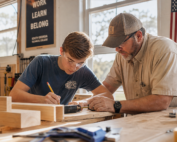
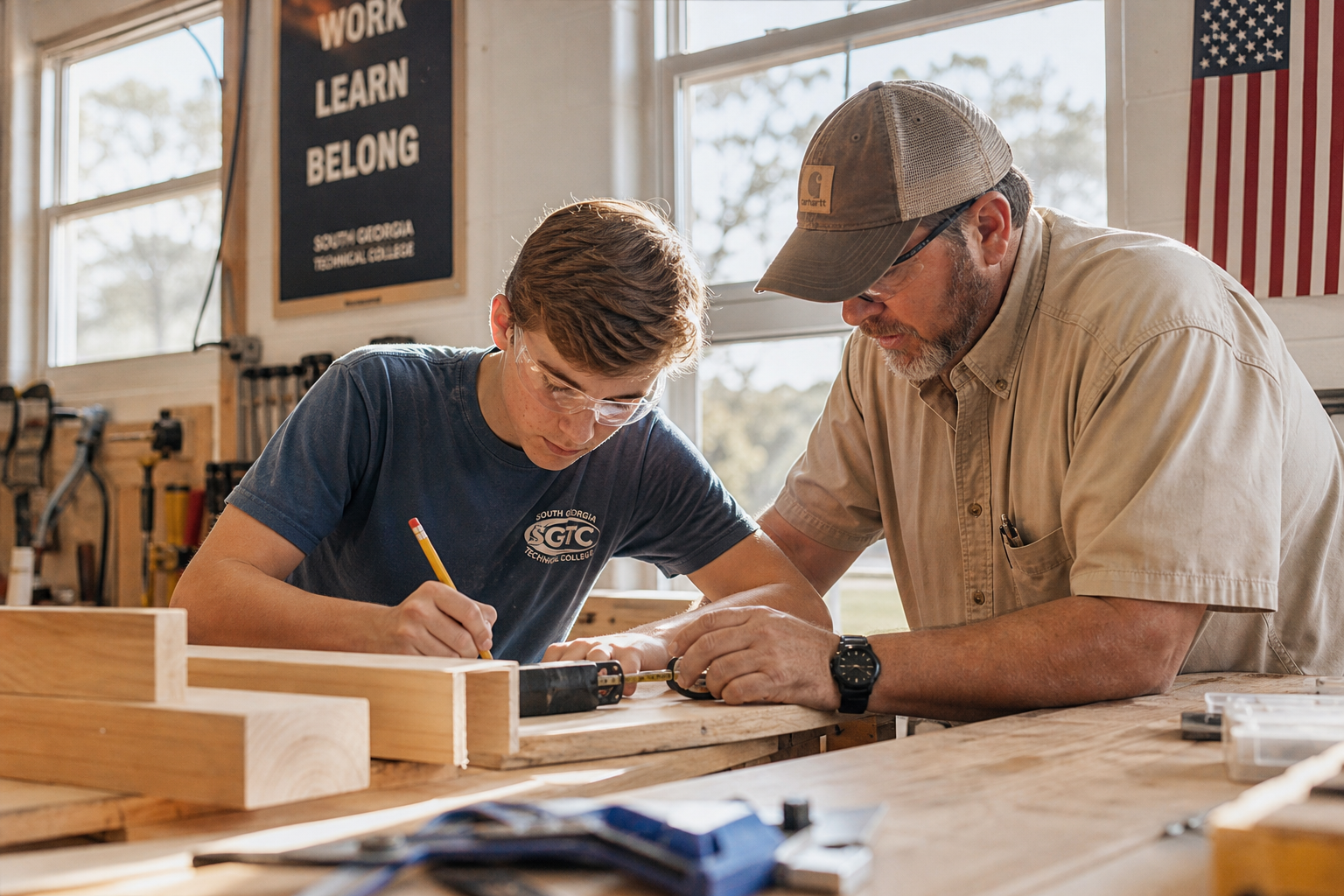
Academic learning is only one half of healthy development. For adolescent boys, physical engagement and practical problem-solving are equally important. Vocational training provides an immediate, tangible bridge between effort and reward.
In a classroom, an essay or math test can feel abstract to a struggling student. In a workshop or on a job site, the feedback is direct and undeniable. If a board is measured improperly, it will not fit. If an engine part is misaligned, the motor will not run. This immediate feedback teaches accountability without the need for endless verbal lectures.
Through hands-on trades—such as carpentry, mechanical repair, facilities maintenance, and agricultural stewardship—young men develop practical life competencies that serve them for decades:
- The Dignity of Hard Work: Completing a physical project teaches young men to take pride in honest labor and respect the effort required to build something lasting.
- Problem-Solving Under Pressure: Mechanical and woodworking tasks require patience, measurement, and persistence when initial attempts do not go as planned.
- Teamwork and Communication: Working together on campus maintenance or construction projects requires active listening and mutual dependability.
- Employability and Career Readiness: Mastering tool safety, workplace responsibility, and reliability makes young men attractive candidates for local employers upon graduation.
How Does the ‘Restored and Returned’ Model Strengthen Georgia and CSRA Communities?
A core principle guiding our ministry is that no young man is meant to remain in a residential bubble forever. Our goal is always to see him restored in character, healed in his family relationships, and returned to his home community ready to make a positive impact.
Young men arrive at our Vidalia campus from communities throughout Georgia—including Augusta, Evans, Martinez, Grovetown, Thomson, and Waynesboro—as well as neighboring South Carolina CSRA areas like Aiken and Edgefield. While they are with us, we invest in them holistically: spiritually, academically, emotionally, and vocationally. But the measure of success is what happens when they go back home.
When a restored young man returns to the CSRA, the ripple effects touch every part of the local community:
- In the Home: He returns with respect for parental authority, open communication, and the maturity to handle household responsibilities.
- In Local Schools and Colleges: Having recovered lost academic credits, he re-enters local education systems with the discipline and study habits needed to earn his diploma or pursue higher education.
- In the Workforce: Equipped with hands-on trade skills and a strong work ethic, he becomes a dependable employee who adds value to local businesses.
- In the Church and Civic Life: Grounded in Christian character and service, he steps up as a leader and mentor to younger peers rather than remaining a consumer of crisis services.
How Do Family Involvement and Transition Planning Ensure Lasting Success?
No student transformation lasts if family dynamics remain unchanged. A young man cannot return to the exact same environment and expect different outcomes without intentional family growth. That is why comprehensive residential care requires active family involvement throughout the process.
Transition planning begins well before graduation day. Our team works closely with parents to establish healthy boundaries, realistic expectations, and consistent communication patterns. Through structured family counseling, parent workshops, and gradual home visits, families practice new relationship habits in real-time.
When a young man nears completion of his program, a concrete aftercare roadmap is built. This plan outlines educational goals, employment opportunities, church connections, and accountability relationships back in his hometown. By establishing this network of support before he leaves campus, we protect the progress he has made and set him up for a smooth re-entry into daily life.
Tailored Solutions: How Different Families and Partners Find Support
Every young man’s path to recovery is unique, and family circumstances vary widely across the state of Georgia. Here is how our comprehensive approach adapts to meet diverse needs:
- For Families in Immediate Crisis: Immediate admissions evaluation, comprehensive transcript review, and customized behavioral assessment to begin credit recovery without delay.
- For Families with Financial Constraints: Transparent scholarship assistance and Georgia tax-credit scholarship opportunities that ensure placement is accessible regardless of financial background.
- For Community Churches and Mentors: Collaborative partnership models that provide youth pastors and community leaders with guidance on walking alongside returning young men.
- For Regional Donors and Civic Partners: A proven, accountable model with measurable community return on investment, turning at-risk youth into productive regional contributors.
Why Choose Paul Anderson Youth Home for Your Son’s Education and Growth?
Founded in 1961 by Olympic gold medalist Paul Anderson and his wife Glenda, the Paul Anderson Youth Home has stood as a beacon of hope for troubled young men for over 60 years. Paul Anderson, once celebrated as the world’s strongest man, dedicated his life to demonstrating that true strength comes from faith in Jesus Christ, disciplined living, and serving others.
Located on a peaceful campus in Vidalia, Georgia, our accredited Christian residential school provides an environment free from negative cultural noise where boys ages 15–21 can find second chances. Our program is fully accredited through Cognia and accredited by CARF International, ensuring the highest standards of educational rigor and clinical care.
We do not simply manage behavior; we reach the heart. Through daily Christian devotionals, one-on-one mentorship, licensed counseling, and accredited high school courses, we provide the total structure young men need to rebuild their lives. Every boy is valued as an individual made in the image of God, worthy of investment and capable of remarkable growth.
Frequently Asked Questions
Will my son receive an accredited high school diploma through Paul Anderson Youth Home?
Yes. Our on-campus school is fully accredited by Cognia. All completed coursework and credits transfer seamlessly back to public or private high schools across Georgia, and graduating students earn a recognized, state-compliant high school diploma.
How many credits can a struggling student recover during his time in the program?
Because our educational model utilizes small group instruction and individualized pacing, motivated students can often recover multiple failed semesters within a single academic year, rapidly closing graduation gaps and rebuilding their grade point average.
What vocational trades and life skills are taught on campus?
Students gain practical experience in woodworking and carpentry, small engine repair, general facilities maintenance, culinary operations, and agricultural tasks, learning workplace safety, personal accountability, and problem-solving skills along the way.
Can families in the CSRA visit their sons while they are enrolled in Vidalia?
Yes. Family involvement is central to our program. Families participate in scheduled visitation weekends, on-campus parent seminars, and regular phone check-ins, ensuring relational growth happens together throughout the student’s stay.
Is tuition assistance or scholarship support available for Georgia families?
Yes. We believe financial limitations should never prevent a struggling young man from receiving help. We offer private scholarship funds and participate in Georgia tax-credit scholarship programs to assist families who qualify.
Taking the First Step Toward Your Son’s Restoration
Watching your son struggle with failing grades, low self-esteem, and behavioral conflict is one of the hardest trials any parent can face. But your family does not have to walk this road alone. Academic recovery, restored character, and renewed purpose are possible when a young man is given the right environment, intentional guidance, and the transformative message of Christ.
At Paul Anderson Youth Home, we are ready to partner with you. If you are a parent or guardian in Augusta, the CSRA, or anywhere in Georgia seeking help for your son, we invite you to take the first step today. Explore our Admissions Process or reach out directly to our caring team to discuss your son’s unique needs.
For community leaders, churches, and supporters who want to invest in the next generation, your partnership provides the scholarship funding that makes this work possible. Discover how you can Get Involved with PAYH and help us restore young men and return them home to build stronger communities.
Stay Updated
Sign up for our monthly newsletter and weekly devotional