Executive Summary: For young men falling behind in traditional classrooms and facing behavioral crises, traditional punitive measures rarely build a sustainable future. Integrating accredited high school credit recovery with hands-on trade skills and biblical mentorship provides an intentional bridge from distress to dignity. At Paul Anderson Youth Home in Vidalia, Georgia, we prepare young men across the Central Savannah River Area (CSRA) and statewide to return home restored, educated, and equipped for lifelong purpose.
Key Questions Answered for Families and Partners:
- What is the role of vocational training in youth recovery? Practical trade training channels nervous energy and past frustrations into tangible competence, teaching problem-solving, work ethic, and career readiness.
- How does accredited academic recovery work in residential care? Small learning environments, certified instructors, and individualized pacing allow students to recover missing credits and earn a Cognia and ACSI accredited diploma.
- What does the “Restored and Returned” pathway mean for CSRA communities? It ensures young men from Augusta, Evans, and surrounding counties return as responsible sons, skilled workers, and faithful leaders rather than burdens on the justice system.
Why Academic Frustration and Vocational Gaps Derail Young Men
Vocational training for troubled youth provides young men with practical, marketable skills, structured discipline, and academic credit recovery, allowing them to rebuild confidence and transition into productive adulthood. When a teenage boy begins failing classes, skipping school, or acting out in anger, the underlying cause is frequently not a lack of intelligence, but a profound sense of academic defeat and aimlessness. In conventional classroom settings, young men who learn best through active problem-solving often disengage when falling behind, triggering a cycle of rebellion, truancy, and emotional distress.
For parents across Georgia and the Central Savannah River Area (CSRA)—including Augusta, Evans, Grovetown, and Waynesboro—watching a bright son lose his ambition is heartbreaking. You watch grades plummet, communication break down, and negative peer influences replace family values. At Paul Anderson Youth Home in Vidalia, Georgia, our unified faculty and mentors have walked alongside struggling young men and their families since 1961. We know that real restoration requires engaging the mind, the hands, and the heart in unison.
Key Takeaways (TL;DR)
- Education and Trades Reinforce Character: Earning an accredited diploma alongside practical vocational experience replaces feelings of inadequacy with tangible accomplishment.
- Restored and Returned Mission: We invest in young men so they return home to the CSRA and Georgia communities stronger, ready to hold jobs, rebuild family trust, and contribute positively.
- Community Return on Investment: Georgia tax-credit scholarships and donor support make residential restoration accessible, transforming potential public burdens into skilled community assets.
The Rise of Skilled Trade Demands and Career Readiness in Georgia
Georgia’s economic landscape is experiencing historic growth in industrial, construction, manufacturing, and technical sectors. State workforce initiatives and recent regional labor developments highlighted by the Central Savannah River Area skilled trades expansion demonstrate an unprecedented regional demand for certified, disciplined craftsmen. Yet many adolescent males remain disconnected from these viable pathways because of unresolved behavioral challenges or incomplete diplomas.
According to recent educational reports from the Georgia Department of Education graduation rate benchmarks, while statewide graduation rates have reached 88.5%, students navigating behavioral interventions or alternative settings require tailored credit recovery models to stay on track. Without a high school diploma and basic technical competencies, at-risk youth face severe economic instability, underemployment, and elevated risks of legal involvement.
| Educational Barrier | Traditional School Challenge | PAYH Holistic Solution |
|---|---|---|
| Credit Deficits | Overcrowded classrooms and inflexible pacing | Accredited individualized pacing with small teacher-to-student ratios |
| Aimlessness & Disengagement | Theoretical instruction without practical application | Hands-on campus maintenance, woodworking, culinary, and technical skills |
| Lack of Accountability | Unstructured peer environments and digital distraction | Daily routine: 6:00 AM mile run, chores, Bible study, and structured work details |
Vocational Mentorship and Academic Recovery in Practice
At our campus in Vidalia, Georgia, academic and vocational training are not treated as isolated tasks. They are integrated into our comprehensive S.H.A.P.E. UP curriculum, which addresses Spiritual guidance, Honorable work ethic, Academic excellence, Physical fitness, and Emotional growth.
1. On-Campus Accredited Schooling
Paul Anderson Youth Home operates a fully accredited on-campus school recognized by Cognia and the Association of Christian Schools International (ACSI). Certified educators assess each young man’s transcript upon arrival, building a customized Individual Service Plan (ISP) that bridges specific learning gaps. Students work diligently through core subjects, mastering math, science, language arts, and history at their own pace while regaining pride in their scholastic abilities.
2. Practical Hands-On Vocational Disciplines
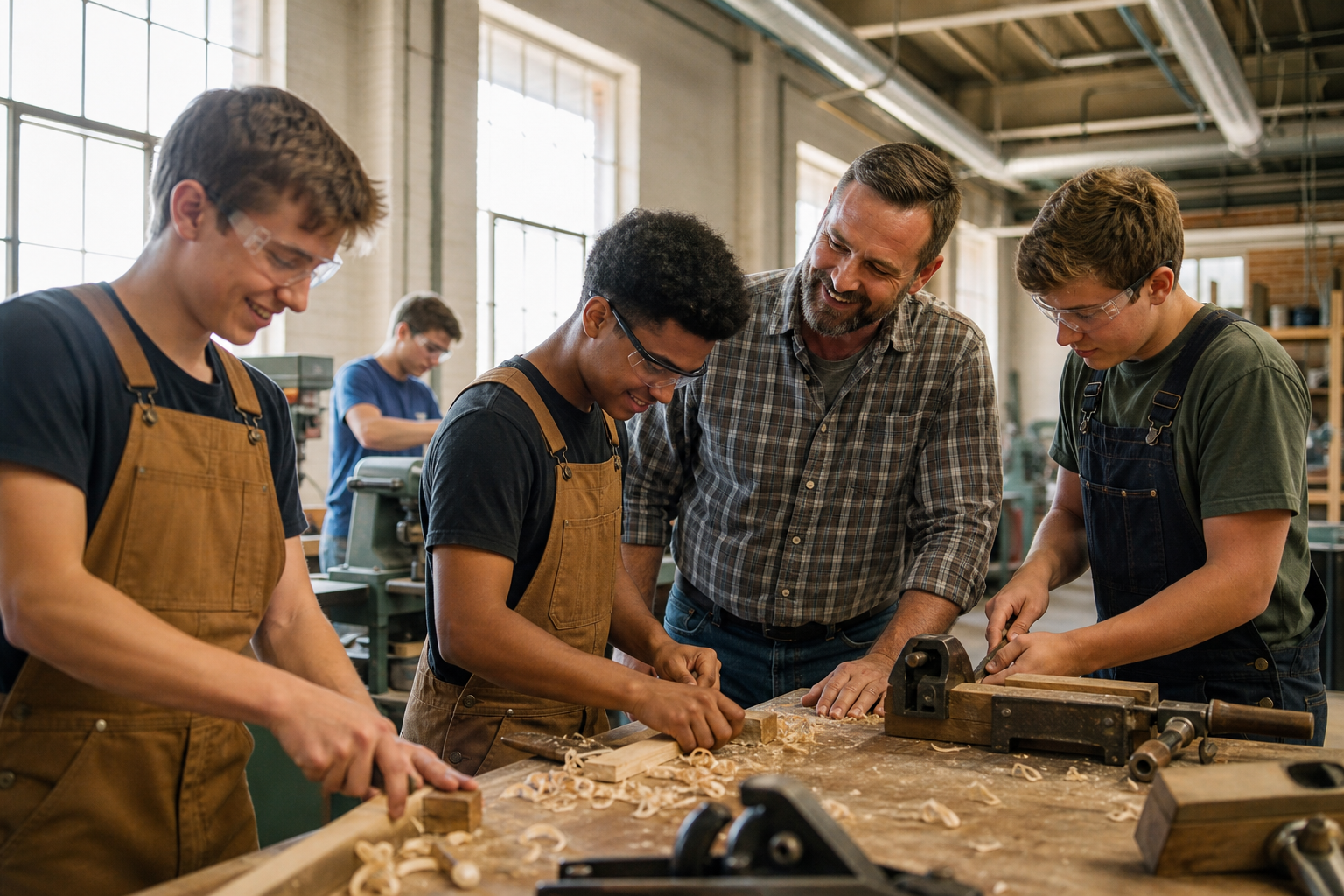
Olympic champion Paul Anderson knew that physical labor and discipline forge mental toughness. Our residents do not spend their days idle. They participate in campus maintenance, woodworking, landscaping, mechanical upkeep, and culinary food preparation. Learning to use tools safely, troubleshoot mechanical repairs, and build physical structures teaches young men patience, precision, and respect for craftsmanship.
3. Work Ethic and Accountability
Every resident learns personal responsibility from sunrise to sunset. They keep their living quarters immaculate, complete assigned campus duties, and work cooperatively in teams. This structured work ethic instills the habit of punctuality, respect for supervisors, and pride in completing a job well—qualities essential for any future career or apprenticeship.
Restored and Returned: The Path Back to CSRA Communities
Our core philosophy centers on the conviction of being Restored and Returned. We do not institutionalize young men; we prepare them to go home. Throughout their stay, our staff collaborates with parents, churches, and local leaders in Augusta, Evans, Aiken, and surrounding counties to lay the groundwork for smooth reintegration.
Consider an illustrative composite of a typical young man from the CSRA whom we will call Caleb. Arriving at age 16 after chronic school truancy and minor legal infractions, Caleb was three semesters behind in high school credits and convinced he had no future. During his 16 months at Paul Anderson Youth Home, Christian mentors walked alongside him daily. Caleb completed his coursework to earn his high school diploma, mastered basic carpentry in our campus workshop, and reconnected with his faith.
When Caleb graduated from PAYH, he returned to the Augusta area not as an at-risk youth, but as a young man with a clear vocational direction, an active church connection, and a repaired relationship with his parents. Today, he works for a local electrical contractor in Richmond County, contributing productively to his community.
Tailored Solutions for Families and Regional Supporters
Every young man arrives with unique strengths, academic histories, and emotional hurdles. When evaluating residential programs, families and supporters should review how customized planning addresses specific variables:
- Academic Trajectory: Whether a student requires rapid high school credit recovery, remedial tutoring, or dual-enrollment college preparation.
- Vocational Aptitude: Matching practical interests in construction trades, mechanical systems, or culinary arts with structured campus assignments.
- Family Dynamics and Location: Active family participation through workshops, scheduled calls, and reunification planning across Georgia and South Carolina CSRA counties.
- Tuition Assistance & Scholarships: Utilizing available scholarship funds, including Georgia Qualified Education Expense Tax Credit options, so financial constraints do not prevent life-changing care.
Why Choose Paul Anderson Youth Home: 60+ Years of Christ-Centered Transformation
For more than six decades, Paul Anderson Youth Home has stood as a beacon of hope for families facing crisis. Founded in 1961 by Olympic gold medalist Paul Anderson and his wife Glenda, our Christian residential ministry provides a proven alternative to juvenile detention and secular reformatories.
Our ministry combines world-class accreditations with compassionate, Christ-centered mentorship:
- Educational & Clinical Accreditations: Accredited by Cognia, ACSI, and CARF International, ensuring top-tier academic and behavioral standards.
- Financial Integrity: Recognized by the Evangelical Council for Financial Accountability (ECFA) and high Charity Navigator stewardship rankings.
- Lasting Legacy: Over 1,400 young men have been given a second chance, breaking destructive generational cycles through the gospel of Jesus Christ.
If your son is struggling with academic failure, behavioral defiance, or legal challenges, we invite you to review our admissions and application process. If you are a supporter or church leader in the CSRA wanting to sponsor a scholarship, discover how you can partner with our ministry today.
Frequently Asked Questions About Vocational and Academic Youth Recovery
What educational accreditation does Paul Anderson Youth Home maintain?
Our on-campus school is fully accredited through Cognia and the Association of Christian Schools International (ACSI). Graduating residents earn official, recognized high school diplomas accepted by colleges, trade schools, and employers nationwide.
How does vocational training help troubled youth in Georgia?
Vocational training develops practical competence, self-discipline, and problem-solving skills. By mastering hands-on trades like woodworking and facility maintenance, young men build confidence and prepare for viable career pathways upon returning home.
Are scholarships available for families in Augusta and the CSRA?
Yes. Thanks to faithful donors and Georgia tax-credit scholarship initiatives, tuition assistance is available so financial barriers do not prevent a young man from receiving help at Paul Anderson Youth Home.
How does PAYH prepare young men to return to their communities?
Our transition planning includes family counseling, life skills training, resume preparation, and spiritual grounding, ensuring every graduate returns to his hometown ready to contribute as a son, employee, and neighbor.
Take the Next Step Toward Restoring Your Son’s Future
Your son’s struggles do not define his destiny. With structured discipline, academic recovery, and Christian love, he can discover his God-given purpose and return home stronger. At Paul Anderson Youth Home in Vidalia, Georgia, we are ready to stand with your family. Explore our family resources or contact our admissions team today to begin the journey of restoration.
Stay Updated
Sign up for our monthly newsletter and weekly devotional